
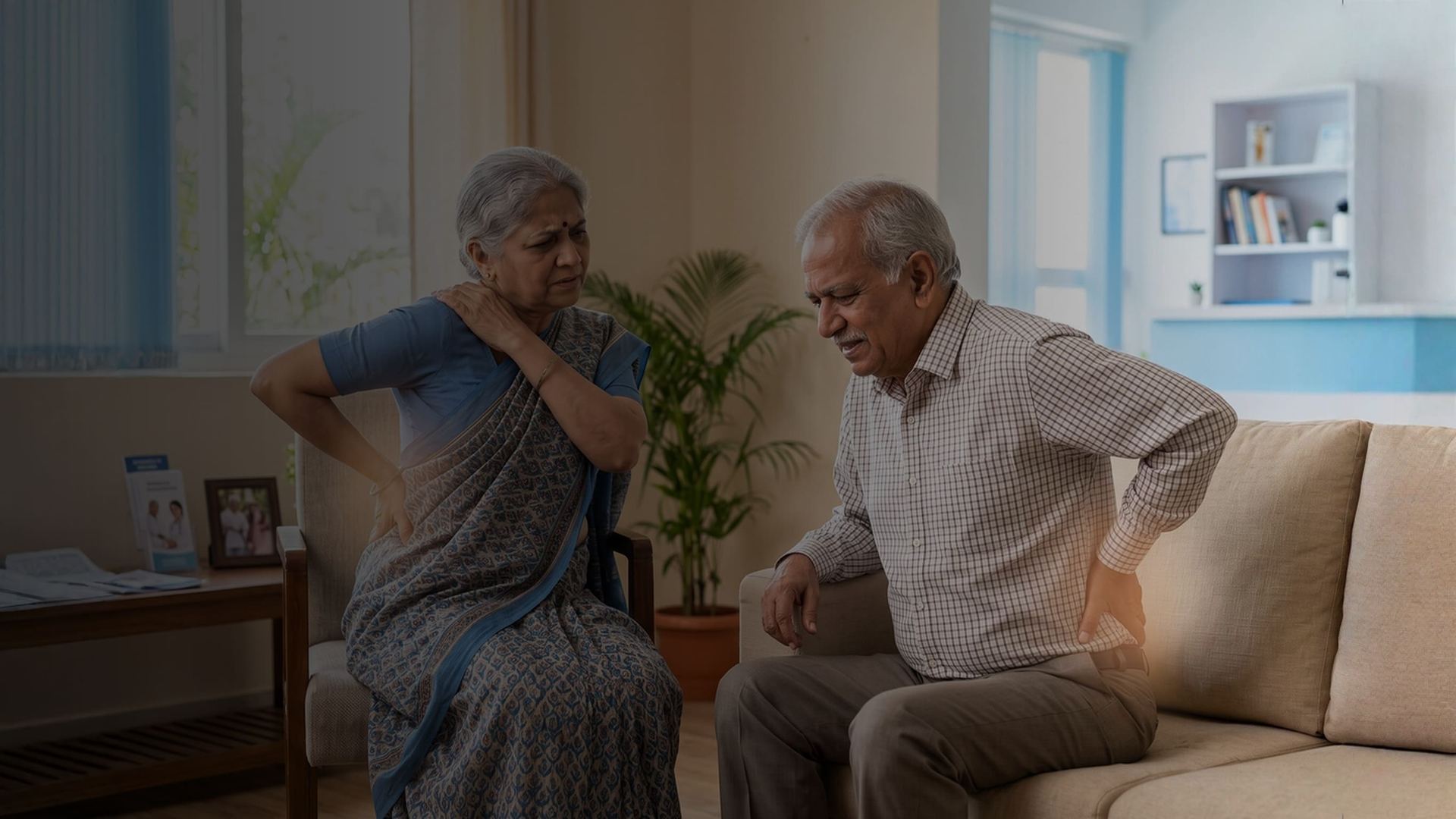
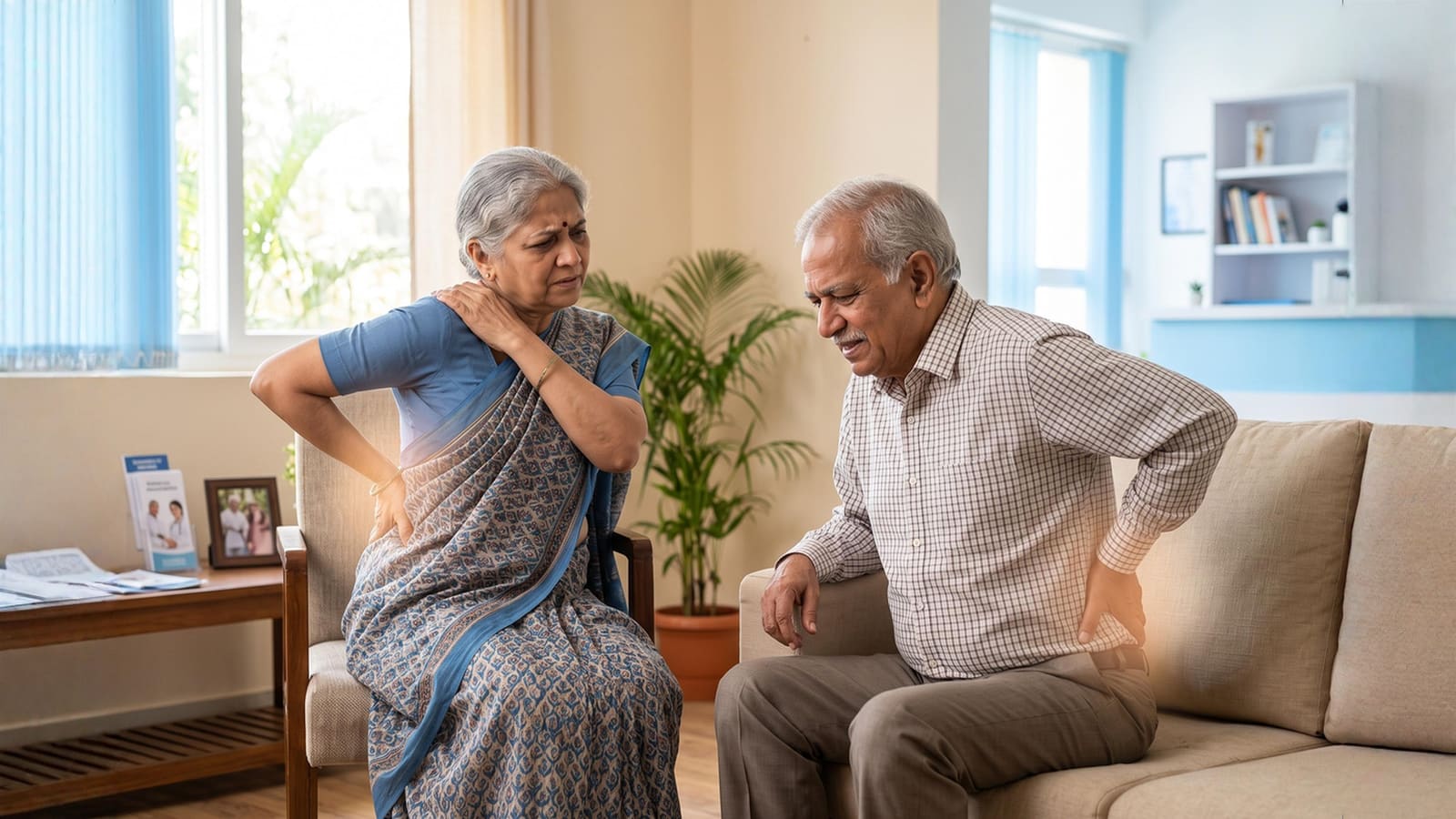
What happens in back pain.
Back pain in older adults can come from the muscles, discs, joints, or nerves of the spine, anywhere from the upper back down to the lower back. It ranges from a dull ache to a sharp catch, and it often links to posture, weak core muscles, and age-related changes in the spine.
Signs you may notice
- Lower Back AcheA steady ache or stiffness in the lower back
- Pain on SittingPain that grows after sitting or standing for long
- Bending and LiftingTrouble bending or lifting
- Pain Into the LegAt times pain that travels into the hip or leg
What we treat under back pain
Thoracic pain
Pain higher up, in the upper and mid back.
Low back pain
The most common, from the muscles, posture, and daily strain.
Lumbar spondylosis
Age-related changes in the lower spine.
Lumbar radiculopathy (sciatica)
A pinched nerve that sends pain down the leg.
Intervertebral Disc Prolapse (IVDP)
A disc pressing on nearby nerves.
Spinal stenosis
Less space around the nerves, causing pain and heaviness in the legs.
Sacroiliac joint dysfunction
Pain from the joint where the spine meets the pelvis.
Spondylolisthesis
One vertebra shifting over another.
Postural dysfunction
Pain that builds from how you sit and stand.
How we treat back pain.
Every treatment is shaped around your body and your pace
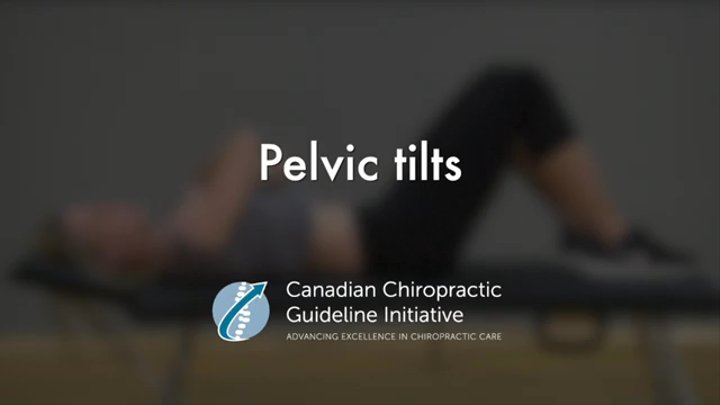


See how we treat your condition, what your plan would include, and how our care works together. We will send it to you on WhatsApp.
Send me the full plan on WhatsApp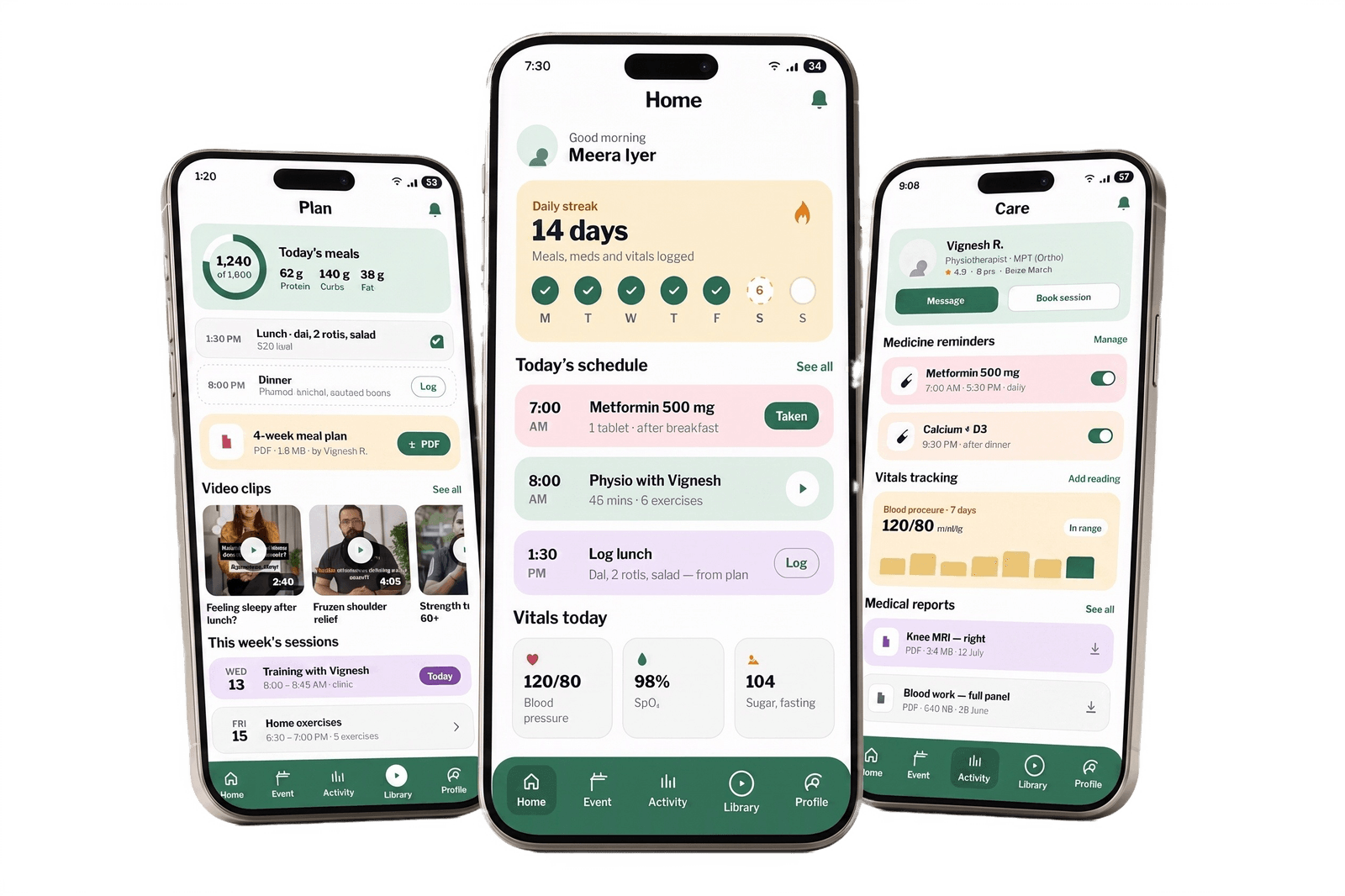
Kinetic Age App
Your exercise plans live in the app, so you can follow them between visits.
Tap to downloadWhat our members say
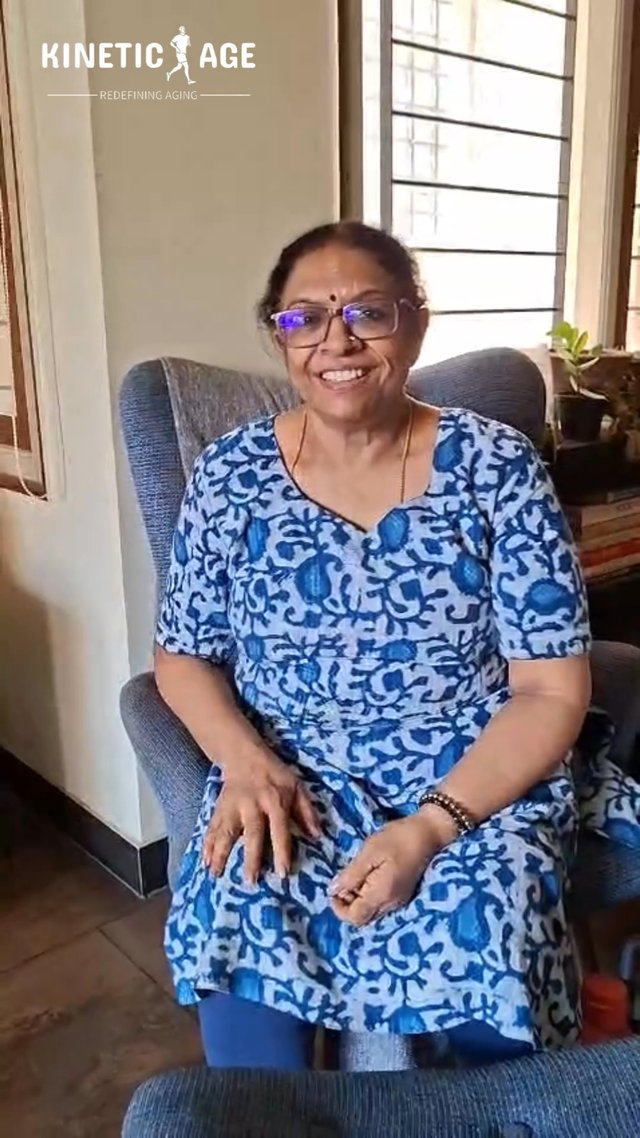
- Able to do sit to standimproved from 1 to 15 able to do sit to stand
I am happy with how I am recovering. I feel stronger now, and each week I can do a little more on my own.
FahadStrength & Conditioning Coach
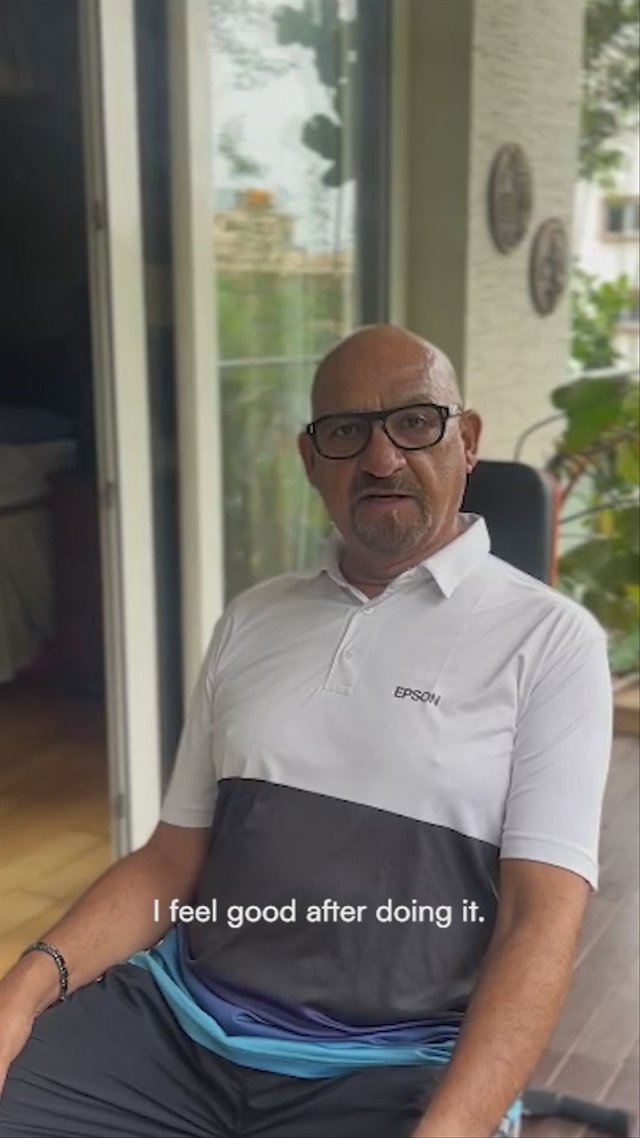
- Able to do steps at a timeimproved from 1 to 20 able to do steps at a time
At first I could manage one step before I had to stop. Now I walk to the temple every morning, twenty steps at a time.
Khushi KinkhabwalaPhysiotherapist & Geriatric Exercise Specialist
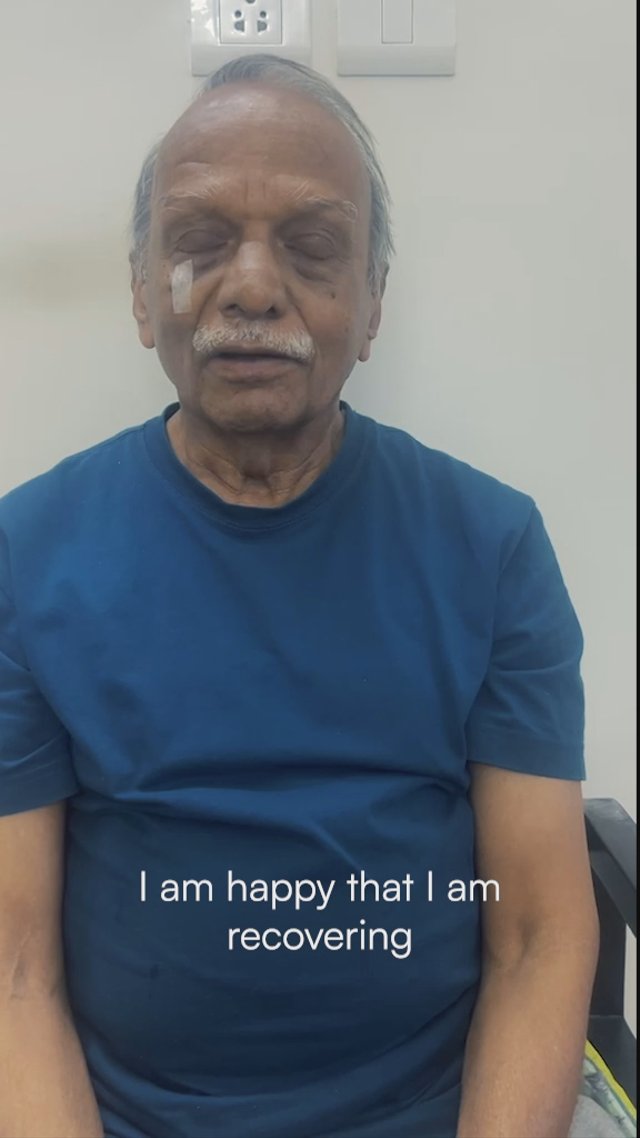
- Able to walkimproved from 10m to 20m able to walk
I am happy with how I am recovering. A few months ago I could barely stand on my own, and now I am walking again.
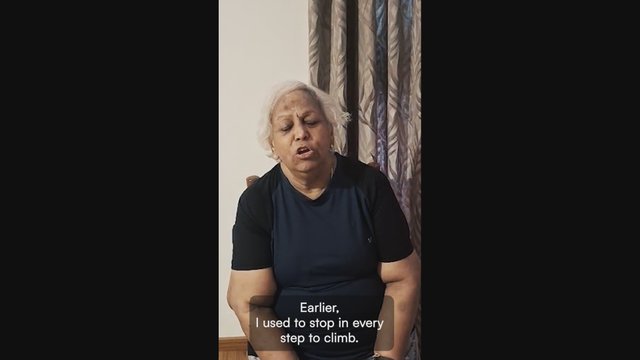
Sample copy
Sample copy. This member’s own words go here, once the quote has been transcribed from her clip and approved.
Clinician to be confirmedRole to be confirmed Sample copy
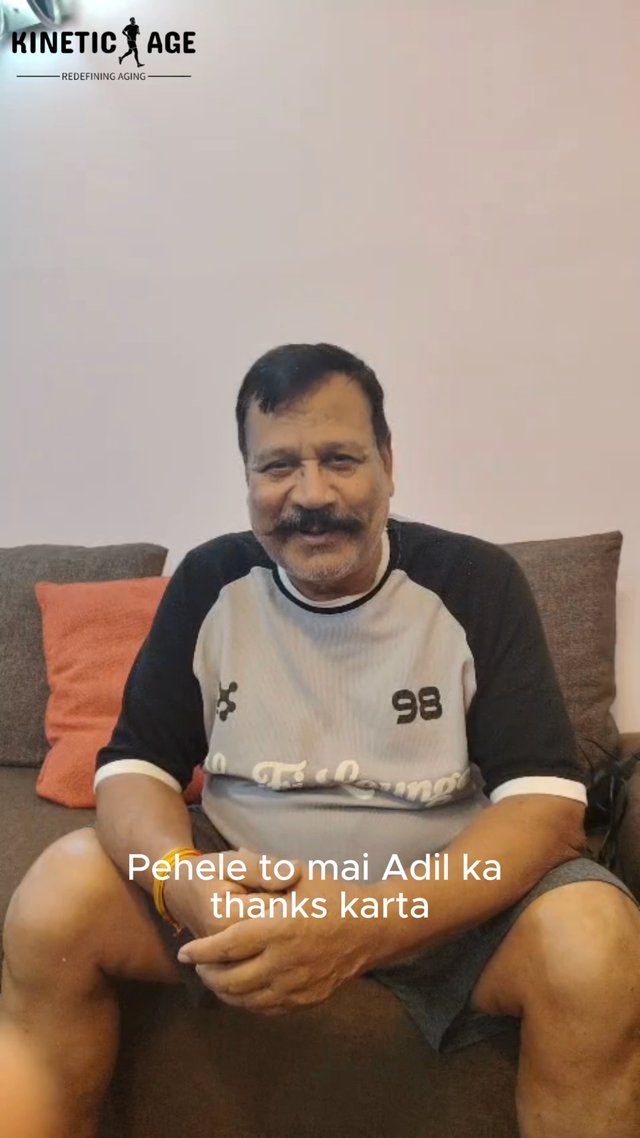
Sample copy. This clip is in Hindi and thanks a trainer named Adil; the member has not been identified, so nothing here is theirs yet.
Clinician to be confirmedRole to be confirmed
Start with a free at-home assessment.
A physiotherapist assesses you and treats you in the first session.
Book a free sessionPeople Also Ask
Can back pain be treated at home?
Yes. A qualified specialist brings physiotherapy, core training, and a calm posture routine to your home, with a plan built around your back and your daily habits. The aim is a back that feels stronger in daily life.
Can back pain improve with therapy instead of surgery?
For many people, yes. Guided therapy, the right exercises, and better daily habits can ease back pain and reduce the need for surgery. Your doctor reviews what fits your case.
What causes back pain in older adults?
It often comes from weak core muscles, poor posture, age-related changes in the spine, and strain from daily movement. These usually combine.
What exercises help with back pain?
Guided exercises help with back pain a great deal, and they hold well when paired with posture care and a plan that adjusts as you improve.
Is a doctor involved in the treatment?
Yes. A doctor reviews your health and decides what would help, including what you can skip.