
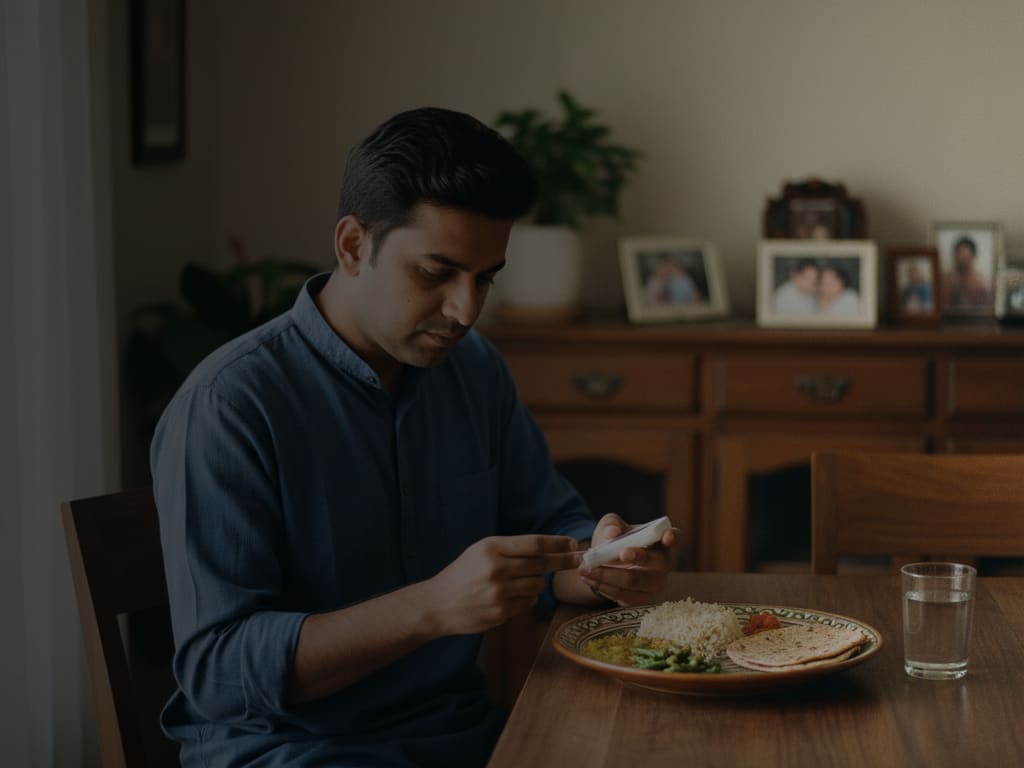
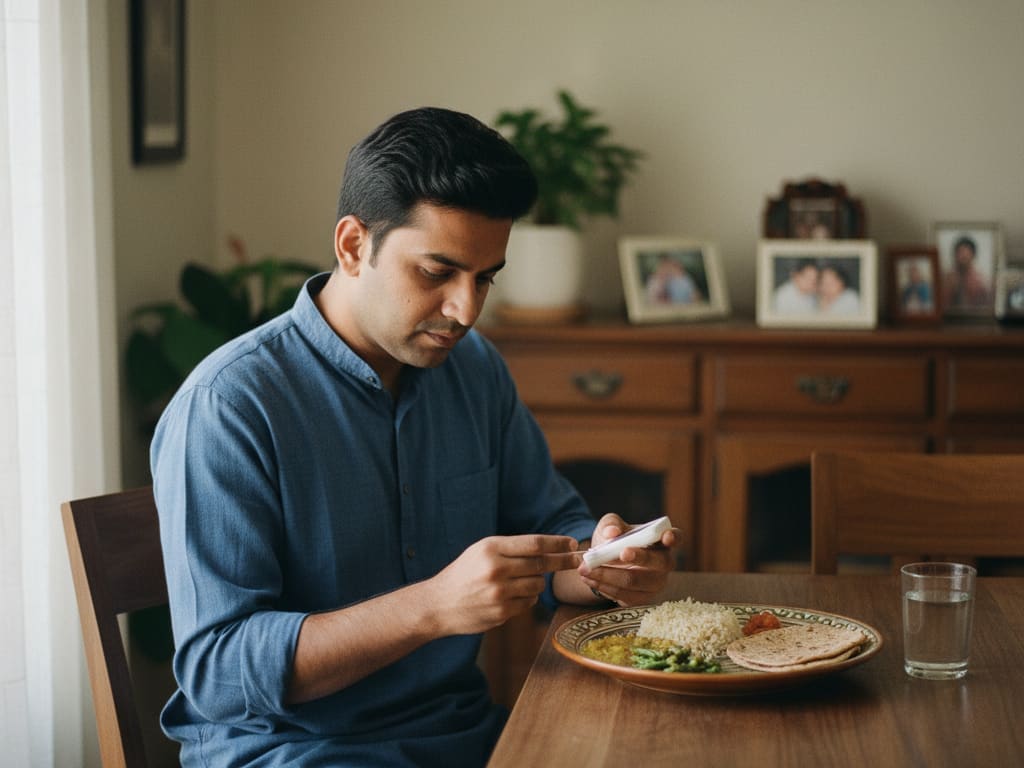
What happens in diabetes.
Diabetes is when blood sugar stays higher than it should, which over time affects energy, weight, nerves, and other parts of your health. With the right daily care, food, and support, many people manage it well and feel the difference.
Signs you may notice
- Low EnergyFeeling tired or low on energy
- Thirst and UrinationFeeling thirsty or needing to pass urine often
- Slow HealingSlow healing of small wounds
- Weight ChangesChanges in weight
What we treat under diabetes
Diabetes-related mobility issues
When blood sugar stays high over time, it saps energy and weakens muscles, so walking and daily movement feel harder.
Diabetes-related functional limitations
Reduced strength, slower healing, and lower stamina that make everyday tasks take more out of you.
How we treat diabetes.
Every treatment is shaped around your body and your pace



See how we treat your condition, what your plan would include, and how our care works together. We will send it to you on WhatsApp.
Send me the full plan on WhatsApp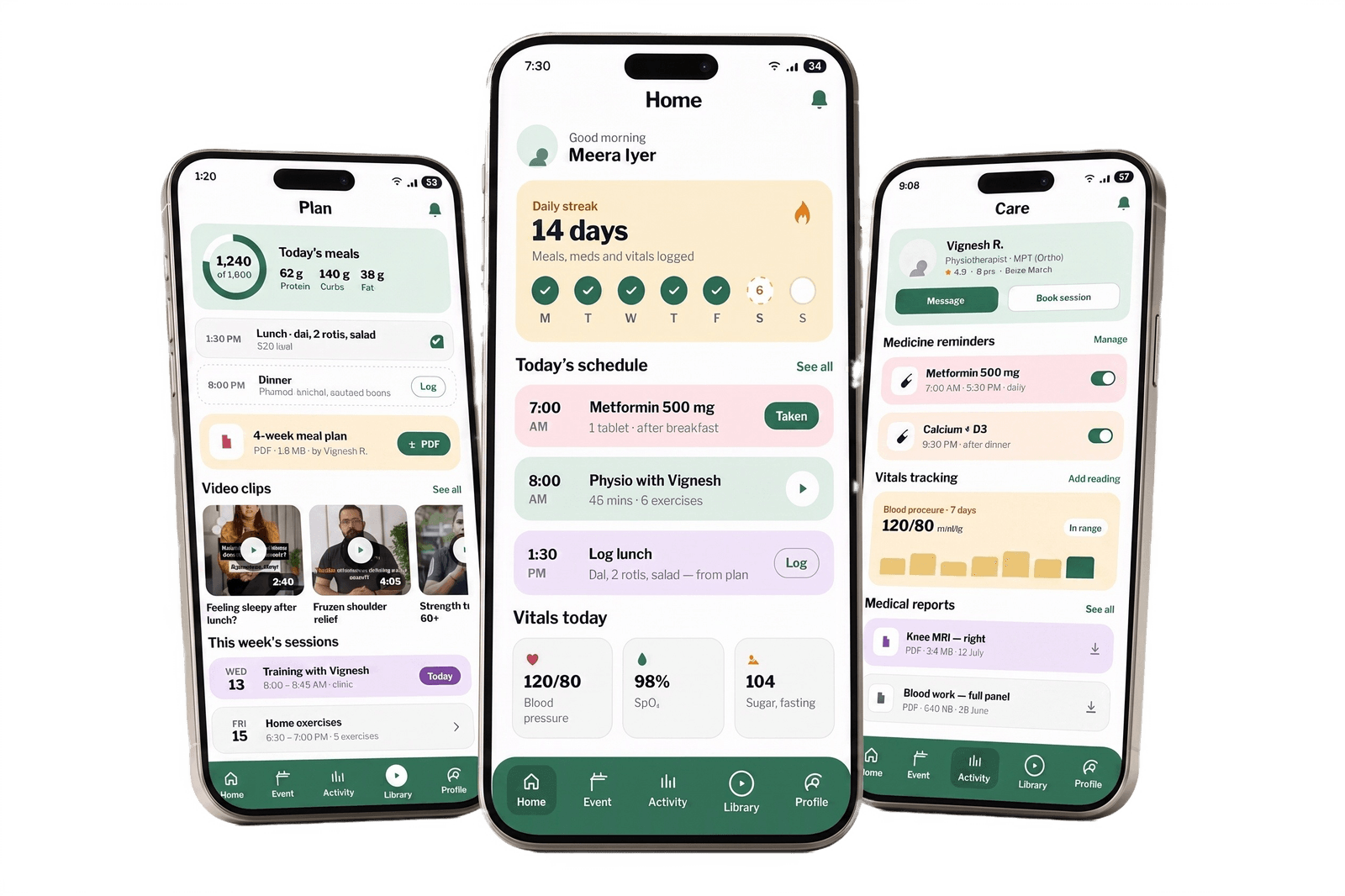
Kinetic Age App
Your exercise plans live in the app, so you can follow them between visits.
Tap to downloadWhat our members say
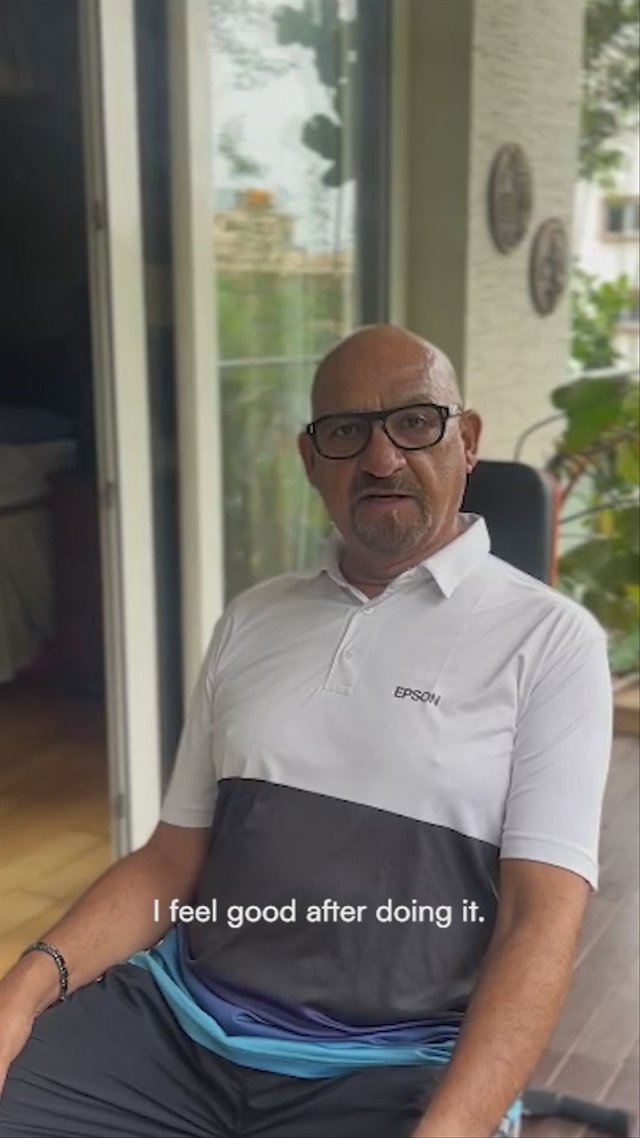
- Able to do sit to standimproved from 1 to 15 able to do sit to stand
I am happy with how I am recovering. I feel stronger now, and each week I can do a little more on my own.
FahadStrength & Conditioning Coach
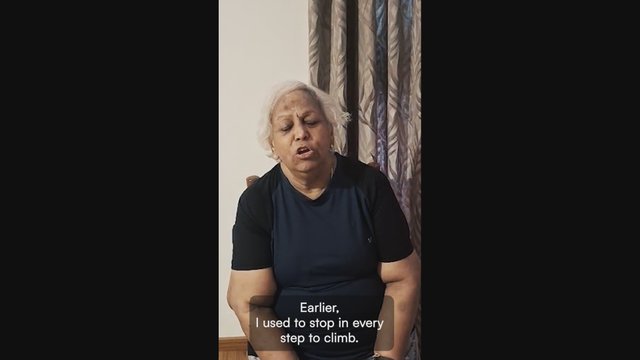
- Able to do steps at a timeimproved from 1 to 20 able to do steps at a time
At first I could manage one step before I had to stop. Now I walk to the temple every morning, twenty steps at a time.
Khushi KinkhabwalaPhysiotherapist & Geriatric Exercise Specialist
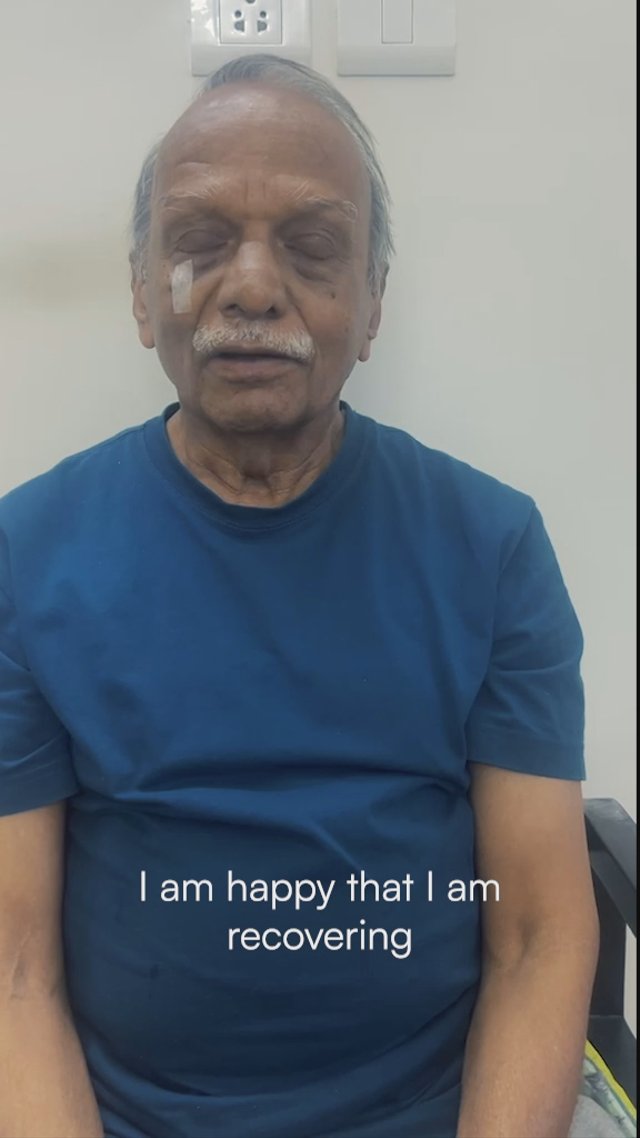
- Able to walkimproved from 10m to 20m able to walk
I am happy with how I am recovering. A few months ago I could barely stand on my own, and now I am walking again.
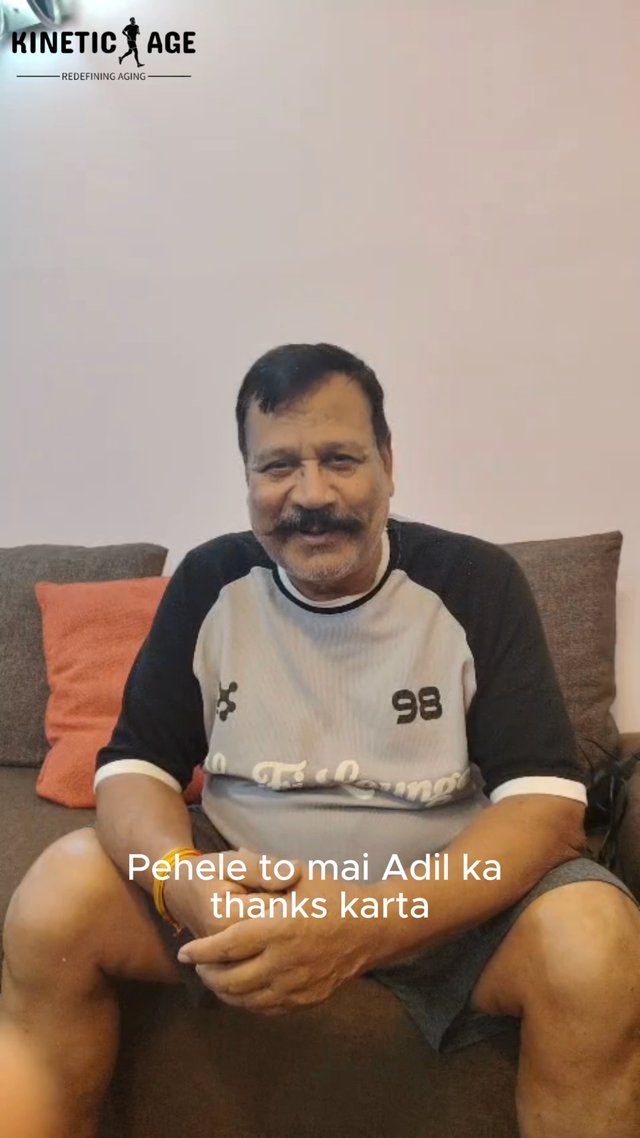
Sample copy
Sample copy. This member’s own words go here, once the quote has been transcribed from her clip and approved.
Clinician to be confirmedRole to be confirmed Sample copy
Sample copy. This clip is in Hindi and thanks a trainer named Adil; the member has not been identified, so nothing here is theirs yet.
Clinician to be confirmedRole to be confirmed
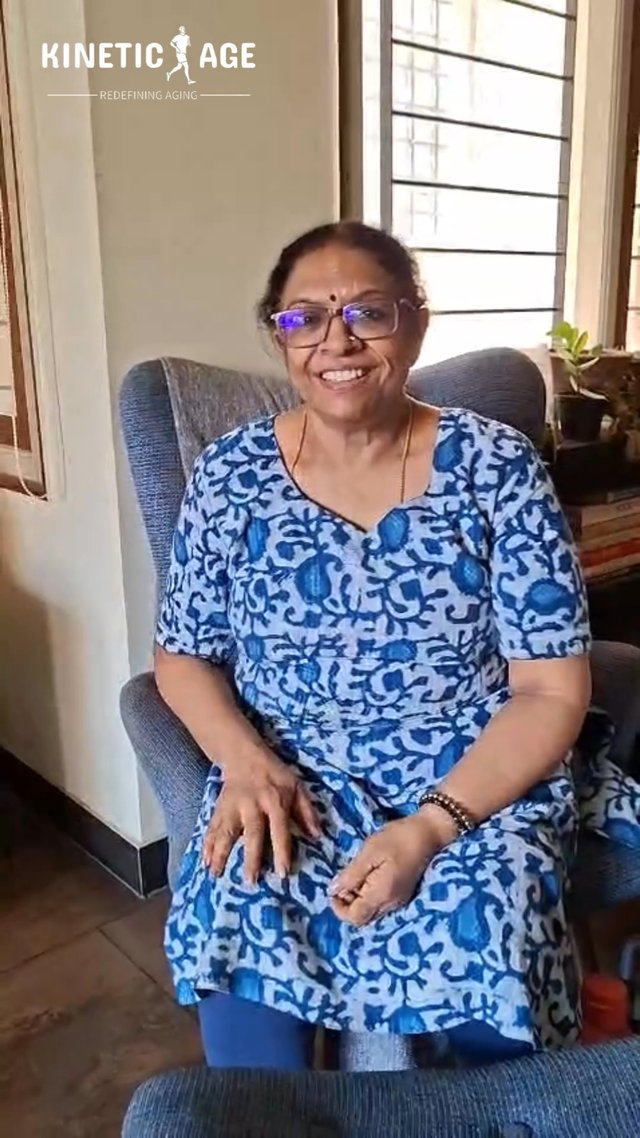
Start with a free at-home assessment.
A physiotherapist assesses you and treats you in the first session.
Book a free sessionPeople Also Ask
Can diabetes be managed at home?
Yes. A specialist builds a plan around your food, your routine, and your reports, all from home.
Can the right food and activity manage diabetes?
For many people, yes. Food and safe activity are among the strongest tools for managing blood sugar, alongside a doctor guiding the plan.
What causes diabetes to get harder to manage with age?
Lower activity, changes in weight, diet, and other health conditions, which often build together.
Is a doctor involved?
Yes. A doctor reads your reports and guides the plan.